While it’s impossible to deny Atlanta’s status as the capital of Southern Hip-Hop, one could go as far as calling the city the current capital of ALL Hip-Hop, considering that a large percentage of the genre’s top acts either hail from, reside in, or mimic the sounds of A-Town. Even super-heavyweight CEOs like Jay-Z, P. Diddy, and 50 Cent are leaning on the city’s talent pool for a little extra heat (well, Hov’ and 50 are leanin’, but Puff has a pair of A-Town crutches named Block and Joc holding him up). If you also consider the level of criticism, ridicule, and downright blatant hatin’ that the city’s artists endure on the regular, it should become even more obvious that the “A” is poppin’ like no other — because if they weren’t runnin’ thangs, folks wouldn’t hate on them. That’s just the penalty of leadership.
“The South is killin’ shit right now. So if you hatin’ it, that’s OK,” rationalizes Michael “Mr. Collipark” Crooms, veteran of every Hip-Hop trend in Atlanta. “But can you beat it? Y’all wasn’t giving us nothin’ when we bust through the door — we took that shit. So, you gotta do the same thing. If they hatin’, fuck ‘em. What-the-fuck-ever.”
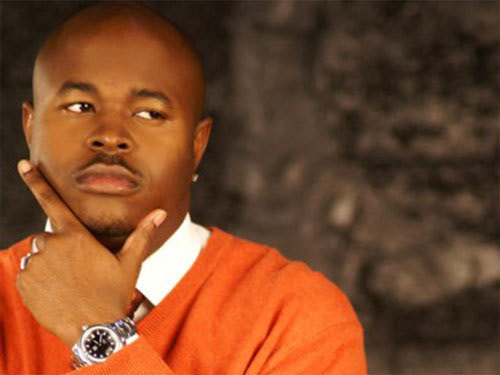
Like it or not, Atlanta is the shit right now. But how did the birthplace of Dr. King go from being barely a blip on the rap map to the home of Hip-Hop heat? Outkast, Cool Breeze and the Dungeon Family may have brought the city into national attention, but Mr. Collipark is the only man who can be considered directly responsible for the two sounds — “Crunk” and so-called “Snap Music” — that rocketed the Southeastern town to stratospheric heights. But he hardly ever gets credit for the things he started.
“Last year was the first year that I started to get respect for what I been doing. I been doin’ this, dogg,” the Florida-born, College Park-bred producer says in between bites of a peanut butter cup stashed in his desk. “I been layin’ the foundation for all this shit. The whole crunk shit, a lot of that sound came from what we started. Even with this whole ‘snap’ movement; when they started branding that they tried to put a hush on [my contribution]. But ‘Wait’ and ‘Play’ was so big… ” Collipark trails off without going into detail about how the singles he produced for The Ying-Yang Twins and David Banner, respectively, started all this finger snappin’ so many young artists have built careers off of.
Collipark started building his own career in Atlanta back when a lot of these whippersnappers out today were still pissin’ in their Voltron underwear. He started deejaying in 1987 as a member of King Edward J’s “J-Team” — one of the first mixtape crews in the city — under the moniker “DJ Smurf”. While making moves on the Southern Bass scene with the J-Team, Smurf was eventually introduced to Atlanta MC Shy D (you remember the line “if you was ridin’, you was bumpin’ the homie Shy D” from JD’s Welcome to Atlanta, right?), and went on to tour with and produce for the local legend. Also a rapper, Smurf released his debut album, Versastyles, in 1995, but it was met with a lukewarm reception. “My album didn’t do that well because people were mad when they bought it,” Collipark reminisces. “They bought it for the single ‘Ooh Lawd (Party People)’, but [that song] was halfway through side B. The rest of it was a mix of East Coast Hip-Hop and West Coast Hip-Hop and I guess they weren’t ready for that.” Even though “Ooh Lawd” was one of the biggest records from the South at the time (“I was one of the first independent artists to get a video on BET”) and the album boasted two more big bass records — “Drop Like This, Bitch” and “To the Walls”, a portion of which was interpolated into The Ying Yang Twins’ single “Get Low” — Versastyles never really took off; and as Bass Music began to fade, so did Smurf’s popularity.
Down but not out, Smurf soon met up with a local artist named D-Roc, and with the later addition of another local named Kaine, The Ying Yang Twins were officially born. Now strictly producing and calling himself “Beat-In-Azz” due to some legal drama over the “Smurf” name, Collipark and Ying Yang created the single “Whistle While You Twurk,” a horny and hyperactive cut that was the first release from the newly-minted Collipark Music label and is part of the foundation of what would later become the “crunk” movement. Using the radio, dance clubs and strip clubs to climb the charts, “Whistle While You Twurk” became a smash hit and prompted the producer to change his name once again. “I needed a name that was more marketable so that I could establish my label,” he recalls, “and I couldn’t do that with a name like ‘Beat-In-Azz’.” He dubbed himself Mr. Collipark after his hometown [of College Park, GA] and his label, and, once again, it was on.
A few years and a few million album sales later, The Ying Yang Twins were certified superstars and Collipark Music was a proven hitmaking machine. But Mr. Collipark still wasn’t satisfied. The uptempo crunk music they helped create was spreading and being popularized by a number of other artists, and the ever-evolving producer was ready for something fresh. Since everybody else was getting crunk, Collipark went the opposite direction and created what he called “intimate club music.” “Wait (Whisper Song)” was the total antithesis of crunkness, from the calm production to the smoothed-out, whispered vocals from Ying Yang. It was something nobody had ever heard, and this time Collipark knew it and planned to capitalize on it. “I had to brand it because of what happened with that whole crunk shit and how they took what we started and lumped it into crunk music,” he says. “I’m determined to let muhfuckas know whenever I start some shit now. I ain’t gon’ wait ’til a nigga steal it then jump up and down and say ‘I started that!’”
Collipark also began to brand himself by abandoning young men’s style and adopting the look of a boss, sporting custom-tailored suits and tugging expensive cigars anytime he was in public. “When I stepped out front that’s how people needed to see me,” he explains of his decision to be perpetually fresh. “I was new to a lot of people, but when they saw how I carried myself it was like, ‘okay, this cat right here must’ve been here before.’ With the work that I put into the game — not just with Ying Yang but with DJing and the whole thing — I felt that whole persona was justified.”
Credit: Getty/Ray Tamarra
As with anything hot, other artists soon latched onto the new sound Collipark Music created — particularly the finger snaps used in the beats — and it was once again time for something new. The Ying Yang Twins’ fifth album, titled Chemically Imbalanced, will be the first experiment with Collipark’s new sound. “When we started this new Ying Yang album, I changed my whole mindframe,” he explains. “I wanted to change up the sound, change up the whole shit. [For this album] I did sessions with Rich Harrison, with Wyclef, I even did sessions with live percussionists. I just love working with people who don’t do what I do because it sparks more creativity and wakes up new sides of you.” That new side also decided that the suits and cigars had to go. “People started to notice [how I was dressed] before they noticed what I was there for,” Collipark admits. “That’s not a bad thing, but I don’t want to be known for just a cigar and a suit – I want to be known for my music.”
And the music is definitely growing. While he hasn’t abandoned his old sounds — as evidenced on songs like the tentative second single from Chemically Imbalanced, the strip club-ready “First Booty On Duty” — his new sound, featured on Ying Yang’s new single featuring Wyclef called “Dangerous,” is definitely unlike anything we’ve heard from Collipark Music. “I don’t think that people are really gon’ get how serious this sound is,” he says. “But that’s because it’s Ying Yang. If it was on a Beyoncé record or something then people would be more open to it, but since it’s Ying Yang a lot of people are gon’ miss it.” It might go over people’s heads, but the same thing happened with Versastyles about a decade ago. But sometimes that’s how a producer stays fresh.
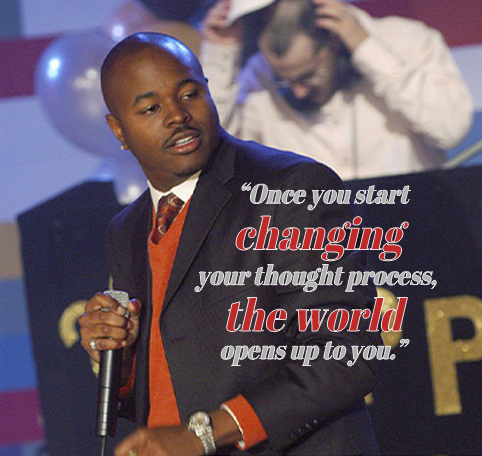
“You’ve gotta keep reinventing yourself. If you get stuck in the past then yo ass is gon’ be right back there,” he preaches. “I’m ready to start over. A lot of people in my position get complacent, but I feel like I ain’t done shit yet. I feel that I haven’t reached my full potential yet, so I’m ready to start fresh and prove to myself that [my talent level is] equal to some of the upper echelon musicians out there. I changed my whole thought process, dogg. Once you start changing your thought process, the world opens up to you.”